
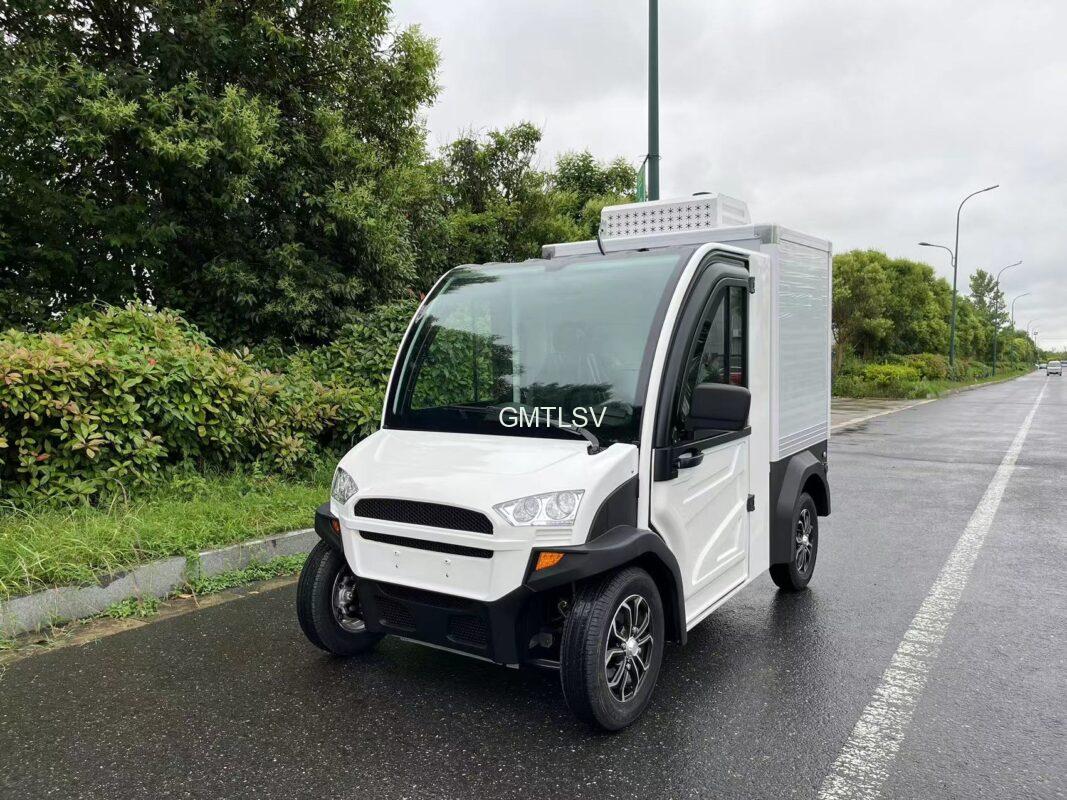
A full-size truck is not always the most practical vehicle for moving tools, equipment, supplies, and materials around a large property.
For farms, warehouses, industrial parks, resorts, campuses, and property management operations, many transportation tasks happen over relatively short distances and at relatively low speeds. In these situations, a compact electric utility vehicle can provide a practical way to move people and cargo around a site without relying on a full-size truck.
Electric utility vehicles are designed for this type of everyday work. With compact dimensions, electric drive systems, cargo space, and low-speed operation, they can support a wide range of internal transportation and maintenance tasks.
This guide explains what electric utility vehicles are, where they can be used, what specifications to consider, and how to choose the right configuration for your operation.
What Is an Electric Utility Vehicle?
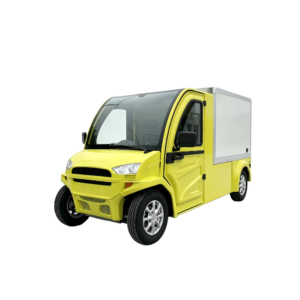
An electric utility vehicle is a compact electric-powered vehicle designed primarily for transportation, maintenance, and light-duty work rather than conventional passenger transportation.
Unlike a standard passenger vehicle, an electric utility vehicle typically places greater emphasis on:
- Cargo carrying capability
- Easy access to tools and supplies
- Compact dimensions
- Low-speed operation
- Electric drive
- Frequent short-distance travel
- Practical operation on private or controlled sites
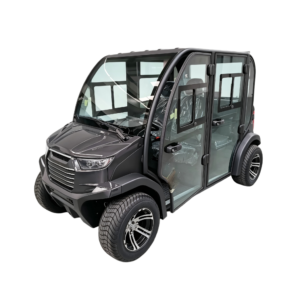
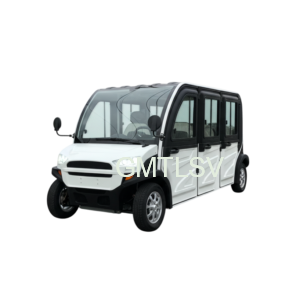
Depending on the configuration, an electric utility vehicle may feature an open cargo bed, enclosed cargo compartment, passenger seating, or a combination of these features.
The right design depends largely on where the vehicle will be used and what it needs to transport.
For example, a property maintenance team may need a vehicle for tools and equipment, while a warehouse may need a compact vehicle for moving supplies between buildings. A farm may require a utility vehicle capable of carrying feed, tools, and other materials around the property.
Electric Utility Vehicle vs. Golf Cart
Electric utility vehicles and golf carts may use similar electric drivetrain technology, but they are designed for different primary purposes.
Golf carts are mainly designed to transport people, particularly on golf courses, resorts, and other properties.
Electric utility vehicles, on the other hand, are designed with work and transportation in mind. They often provide more practical cargo space and can be configured for maintenance, logistics, and other utility applications.
| Feature | Golf Cart | Electric Utility Vehicle |
|---|---|---|
| Main purpose | Passenger transportation | Work and transportation |
| Cargo capacity | Limited | Designed for carrying cargo |
| Vehicle design | Passenger-focused | Utility-focused |
| Typical applications | Golf courses, resorts | Farms, warehouses, industrial sites |
| Work equipment | Limited | More suitable for tools and supplies |
For businesses that need to move equipment and materials on a regular basis, a utility-oriented vehicle may be more suitable than a conventional golf cart.
Where Are Electric Utility Vehicles Used?
One of the biggest advantages of electric utility vehicles is their flexibility.
They can be used in many environments where transportation is primarily within a defined property or site.
Farms and Ranches
Large farms and ranches often require workers to travel between buildings, fields, storage areas, and maintenance locations.
A compact electric utility vehicle can help transport:
- Tools
- Feed and supplies
- Small equipment
- Maintenance materials
- Replacement parts
- Landscaping supplies
Instead of using a full-size truck for every short-distance task, workers can use a smaller vehicle designed specifically for internal transportation.
This can be particularly useful when tasks require frequent stops and starts throughout the day.
Warehouses and Industrial Parks
Warehouses and industrial parks often have large operating areas where employees need to move tools, supplies, and equipment between different buildings or work areas.
An electric utility vehicle can be useful for:
- Maintenance teams
- Facility inspections
- Moving tools
- Transporting spare parts
- Delivering supplies
- Supporting daily site operations
The goal is not necessarily to replace heavy-duty trucks. Instead, these vehicles can handle smaller transportation jobs that do not require a full-size commercial vehicle.
Resorts and Campuses
Resorts, campuses, and other large properties often require frequent internal transportation.
Typical tasks may include:
- Landscaping
- Maintenance
- Housekeeping support
- Facility inspections
- Moving supplies
- Transporting tools and equipment
Quiet electric operation can also be useful in environments where reducing vehicle noise is important.
For resorts and campuses, the vehicle may need to operate around guests, employees, buildings, and pedestrian areas. A compact low-speed vehicle can therefore be a practical option for many internal transportation tasks.
Property Management
Large residential, commercial, or mixed-use properties often have their own maintenance teams.
These teams may need to move tools and supplies between buildings throughout the day.
An electric utility vehicle can support routine jobs such as:
- Property maintenance
- Landscaping
- Facility inspection
- Equipment transportation
- Cleaning and maintenance operations
- Internal delivery
Because these tasks are usually performed within a defined property, a compact utility vehicle can be more practical than a conventional road vehicle.
See an Electric Utility Cargo Van in Action
The following Short shows an example of a compact electric utility cargo van designed for everyday internal transportation and maintenance work.
Watch the electric utility cargo van in action
This type of vehicle combines a compact electric drivetrain with enclosed cargo space, making it suitable for applications where workers need to move tools, equipment, supplies, and materials around a site.
The example shown features a 60V 4kW electric drive, a top speed of up to 40 km/h, and battery options including lithium-ion and maintenance-free lead-acid batteries.
The actual configuration should be selected according to the intended application, cargo requirements, operating environment, and applicable regulations.
Why Choose an Electric Utility Vehicle for Internal Transportation?
The value of an electric utility vehicle is not simply that it uses electricity.
Its main advantage is that the vehicle is designed around the requirements of short-distance, everyday work.
Compact Size
A compact vehicle can be easier to operate in areas with narrow roads, buildings, storage areas, and other restricted spaces.
This can be particularly useful in:
- Warehouses
- Farms
- Resorts
- Campuses
- Industrial parks
- Large private properties
A smaller vehicle can also make frequent stops and short trips more convenient.
Quiet Electric Operation
Electric drivetrains generally operate with less noise than conventional internal combustion engines.
This can be useful for properties where vehicle noise needs to be minimized, including resorts, campuses, residential properties, and certain industrial environments.
Quiet operation can also make communication between workers easier during routine maintenance activities.
Suitable for Short-Distance Transportation
Many work vehicles spend a significant amount of time traveling short distances.
For example, a maintenance worker may travel only a few kilometers throughout a work area while making multiple stops.
Using a full-size truck for every one of these tasks may not be necessary.
A compact electric utility vehicle is designed for exactly this type of transportation.
Low-Speed Operation Can Be an Advantage
A higher top speed is not always better for an internal transportation vehicle.
When operating inside a farm, warehouse, resort, campus, or industrial property, the vehicle may not need highway-level performance.
A vehicle with a top speed of around 40 km/h can be suitable for many internal transportation applications, depending on the site requirements and applicable regulations.
The important factor is choosing a vehicle with performance appropriate for its intended environment.
What Specifications Should You Consider?
Choosing an electric utility vehicle requires more than simply looking at motor power.
The vehicle should be matched to the actual working environment and daily tasks.
Motor Power
Motor power affects the vehicle’s ability to move itself and its cargo.
For example, a 4 kW electric drive system can be suitable for certain light-duty transportation applications.
However, the required motor power depends on factors such as:
- Vehicle weight
- Cargo weight
- Terrain
- Road conditions
- Operating speed
- Frequency of use
A larger motor is not automatically the best choice. The goal is to match the drivetrain to the application.
Battery Type
Battery selection is another important consideration.
Electric utility vehicles may be available with different battery technologies, including:
- Lithium-ion batteries
- Maintenance-free lead-acid batteries
Lithium-ion batteries can offer advantages in terms of weight, energy density, charging characteristics, and service life.
Maintenance-free lead-acid batteries can provide a more traditional and potentially cost-conscious solution for certain applications.
The best choice depends on factors such as daily operating hours, budget, charging requirements, vehicle weight, and expected usage.
Operating Speed
Top speed should be selected based on the working environment.
For internal transportation, a maximum speed of up to 40 km/h may be sufficient for many applications.
However, operating speed should always be considered together with:
- Site conditions
- Traffic
- Pedestrian activity
- Road design
- Local regulations
The fastest vehicle is not necessarily the most suitable vehicle for a work site.
Cargo Space
Cargo configuration is especially important for utility applications.
If workers regularly transport tools, equipment, or supplies, cargo space should be designed around the actual dimensions and weight of those items.
An enclosed cargo compartment can provide additional protection for equipment and supplies from weather and the surrounding environment.
For other applications, an open cargo bed may provide faster loading and unloading.
Need a Compact Electric Work Vehicle?
If your team regularly moves tools, equipment, supplies, or maintenance materials around a farm, warehouse, industrial park, resort, campus, or large property, a compact electric utility vehicle may be worth considering.
Talk to GMTLSV about your application and vehicle requirements.
[Request a Vehicle Solution →Contact US]
Electric Cargo Van vs. Electric Utility Cart
Electric cargo vans and electric utility carts can both be used for internal transportation, but their designs serve different priorities.
Electric Cargo Van
An electric cargo van is generally more suitable when the priority is:
- Enclosed cargo
- Protection from weather
- Secure storage
- Maintenance tools
- Supplies and equipment
- Organized internal transportation
The enclosed body can make it easier to transport items that should be protected from rain, dust, or other environmental conditions.
Electric Utility Cart
An electric utility cart may be more suitable when easy loading and unloading is the priority.
Open cargo configurations can be useful for:
- Larger items
- Irregularly shaped materials
- Landscaping equipment
- Frequently accessed tools
- Fast loading and unloading
The right configuration depends on the working environment and the type of cargo being transported.
How to Choose the Right Electric Utility Vehicle
Before selecting an electric utility vehicle, consider the following questions.
1. Where Will the Vehicle Operate?
Start with the operating environment.
Will the vehicle be used on:
- A farm?
- A warehouse?
- An industrial park?
- A resort?
- A campus?
- A private property?
The terrain, road conditions, traffic, and available space will influence the appropriate vehicle configuration.
2. What Will It Carry?
Make a list of the items the vehicle will transport regularly.
For example:
- Tools
- Equipment
- Supplies
- Maintenance materials
- Spare parts
- Landscaping equipment
Understanding the typical cargo is essential for selecting the right cargo configuration and capacity.
3. Do You Need Enclosed Cargo Space?
If cargo needs protection from weather or dust, an enclosed cargo compartment may be the better option.
If fast access and easy loading are more important, an open cargo bed may be more practical.
4. How Far Will It Travel Each Day?
Daily travel distance affects battery requirements.
A vehicle that operates for several hours every day may require a different battery configuration from one used for occasional short trips.
It is therefore useful to consider:
- Average daily distance
- Operating hours
- Number of trips
- Charging opportunities
- Typical cargo load
5. What Speed Do You Actually Need?
Consider the actual speed requirements of your site.
If most transportation takes place within a controlled property, there may be little benefit in choosing a vehicle with unnecessarily high speed.
A vehicle that provides the right balance of speed, range, cargo capability, and operating cost can be a more practical solution.
Is a Small Electric Utility Vehicle Right for Your Business?
An electric utility vehicle can be a good option when your transportation needs involve frequent short-distance trips and light or moderate cargo.
It may be particularly suitable for:
- Internal transportation
- Property maintenance
- Farm operations
- Warehouse support
- Industrial park maintenance
- Resort operations
- Campus transportation
- Landscaping
- Facility inspection
However, it is important to understand the limitations.
A compact electric utility vehicle is generally not intended to replace a heavy-duty truck for:
- Long-distance transportation
- Highway driving
- Heavy-duty hauling
- Very large cargo
- Heavy construction applications
The best application is one where the vehicle’s compact size, electric drivetrain, cargo configuration, and operating speed match the working environment.
GMTLSV Electric Utility Vehicles
GMTLSV supplies golf carts, low-speed electric vehicles, utility vehicles, and complete vehicle solutions for different applications.
For businesses and organizations that need a compact work vehicle, an electric cargo van can provide a practical solution for everyday internal transportation.
A typical configuration can include:
- 60V electric system
- 4 kW electric drive
- Up to 40 km/h
- Lithium-ion or maintenance-free lead-acid battery options
- Enclosed cargo space
- Quiet electric operation
The vehicle can be configured for applications such as:
Industrial Parks | Warehouses | Farms & Ranches | Property Management | Resorts | Campuses | Maintenance & Service
The key is not simply choosing an electric vehicle. It is choosing a vehicle that matches the actual work your team performs every day.
Looking for an Electric Utility Vehicle?
GMTLSV supplies electric utility vehicles and low-speed electric vehicles for a variety of commercial, industrial, agricultural, resort, campus, and property-management applications.
Tell us where the vehicle will be used, what you need to carry, your preferred battery type, and your expected operating conditions. Our team can help you identify a suitable vehicle configuration.
[Request a Quote from GMTLSV →Contact US]
[Explore Electric Utility Vehicles →Electric Utility Vehicles]
Frequently Asked Questions
What is an electric utility vehicle used for?
Electric utility vehicles are primarily used for short-distance transportation, maintenance, light cargo handling, and facility support. Common applications include farms, warehouses, industrial parks, resorts, campuses, and large properties.
Are electric utility vehicles the same as golf carts?
No. Although they may share similar electric drivetrain technology, golf carts are primarily designed for passenger transportation, while electric utility vehicles are designed around work, cargo transportation, and maintenance applications.
How fast can an electric utility vehicle go?
The appropriate speed depends on the vehicle configuration and intended application. Some low-speed electric utility vehicles can reach speeds of up to around 40 km/h, but the appropriate operating speed also depends on site conditions and applicable regulations.
Are electric utility vehicles suitable for farms?
Yes. Electric utility vehicles can be useful on farms and ranches for transporting tools, supplies, feed, maintenance equipment, and other materials over short distances.
What type of battery is best for an electric utility vehicle?
There is no single best battery for every application. Lithium-ion and maintenance-free lead-acid batteries can both be suitable depending on budget, operating hours, weight requirements, charging conditions, and expected usage.
Should I choose an electric cargo van or an open utility vehicle?
Choose an enclosed electric cargo van when cargo protection and weather resistance are important. An open utility vehicle may be preferable when quick loading, unloading, and easy access to cargo are the priorities.
Can an electric utility vehicle replace a full-size truck?
Not in every application. Electric utility vehicles are primarily intended for short-distance internal transportation and light or moderate cargo. They are not generally intended to replace heavy-duty trucks for highway travel, long-distance transportation, or heavy hauling.
Final Thoughts
The best work vehicle is not necessarily the largest or fastest one.
For many farms, warehouses, industrial parks, resorts, campuses, and large properties, the everyday transportation challenge is simply moving tools, equipment, supplies, and materials from one location to another.
A compact electric utility vehicle can provide a practical solution for these short-distance tasks.
By considering the operating environment, cargo requirements, battery type, motor power, speed, and cargo configuration, businesses can select a vehicle that is better matched to their actual daily operations.
For organizations looking for a supplier of electric utility vehicles, low-speed electric vehicles, and other work-oriented electric vehicles, GMTLSV can provide different vehicle configurations based on application requirements.
Have a specific application in mind? Contact GMTLSV to discuss your requirements and find a suitable electric utility vehicle solution.

