

When the electric drive system fault pops up on the electric vehicle instrument, the vehicle is directly prohibited from driving. Many faults belong to intermittent recessive faults, which are easier to trigger in bumpy road, rapid deceleration and alternating cold and hot environments. The static reading of fault codes in situ may not be able to reproduce.
Combining with a large number of after-sales failure cases, combing all kinds of typical faults of electric drive system, the following is a simple self-inspection plan for car owners and a simple investigation plan for maintenance engineers.
Common fault source of electric drive system unable to apply high voltage
1.Resolver position signal fault
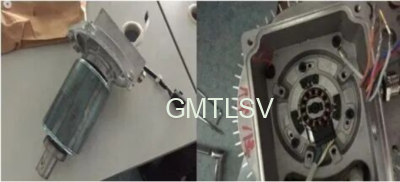
Fault causes: the resolver body is damaged, the connector is loose, and the excitation signal is abnormal; The chassis bumps and pulls the low-voltage harness of the motor, and the harness is worn and in poor contact.
Fault phenomenon: an error is reported occasionally after passing through the pit, and the vehicle can be temporarily restored by restarting; In severe cases, the high pressure is directly locked, and the torque is out of control.
Quality improvement tips: the software enables the resolver fault self-recovery strategy to improve the fault-tolerant capability; The hardware optimizes the harness motion envelope, increases the harness fixing points, and avoids the wear and tear during driving.
2.Abnormal bus voltage sampling
Fault inducement: the voltage sensor is damaged and the sampling circuit is loose and virtually connected.
Fault consequences: false triggering of overvoltage and undervoltage protection, torque and speed jitter, PWM waveform distortion, abnormal heating of the controller, and prohibition of high voltage on the whole vehicle.
3.DC undervoltage/overvoltage
Undervoltage: the high voltage fuse is fused and the main positive/negative relay is disconnected. It will cause motor control instability, motor overheating and output torque deviation.
Overvoltage: Abnormal braking feedback voltage and sudden interruption of high-voltage power supply during high-speed driving. Serious direct breakdown of IGBT power tube accelerates the aging of internal devices and damages the insulation layer.
4.Power tube through (MOS/IGBT hardware serious failure)
Fault inducement: drive chip damage, grid resistance failure, software dead time parameter error; Assembly copper scrap metal foreign matter falls off the busbar, causing short circuit.
Consequence of the fault: the machine blows up smoke, and the power board and bus capacitor are burned down.
Quality improvement tips: FCT leakage current detection is added to the production line, and hidden dangers are screened out in advance after 1 hour high temperature aging at 90 ℃; The hardware changes the busbar through-hole rivet nut into a blind hole to prevent metal debris from falling into the power circuit.
5.MCU and VCU CAN message loss
Fault inducement: CAN bus interference, message frame loss and timeout. The VCU sends a high voltage command, but the MCU fails to receive a valid message and refuses to close the high voltage circuit.
Prompt for quality improvement: It is not allowed to modify the MCU software unilaterally. It is necessary for the MCU and VCU to jointly evaluate the strategy and check the CAN harness and terminal resistance at the same time.
6.Motor phase current overcurrent & current sensor fault
Fault inducement: short circuit between phases of motor, zero offset of resolver, damage of sampling resistor/operational amplifier, and unreasonable software filtering parameters.
Consequences of the failure: the output torque is out of control, there is a risk of runaway, the power device is broken down, and the motor is demagnetized and burned.
7.High voltage relay failure
Fault inducement: poor consistency of relay components, contact ablation and poor contact.
Quality improvement tips: select relays with higher contact reliability, and optimize the software fault determination level to reduce the probability of false alarm.
- Other after-sales high-frequency faults
- The high-voltage three-phase plug of the motor is oxidized by water and the needle is withdrawn, and the failure rate is significantly increased in rainy days;
- The insulation of the motor stator drops, the insulation detection fails, and the whole vehicle is powered on with high voltage;
- MCU internal driving power supply and sampling circuit components are aged and damaged.
Simple self-examination of car owners
1.Accidental fault: lock the car and wait for power off 3 After 5 minutes, try to power on again, and some accidental software failures can be temporarily recovered.
- If there is a breakdown after car washing and rain, the connector will probably be damp, so do not repeatedly power on, and enter the shop for maintenance as soon as possible.
- If the fault remains after restart, do not drive at low speed forcibly to avoid expanding hardware damage, and directly call the trailer to enter the factory.
Practical operation ideas for engineers’ maintenance
Follow the principle of first external and then internal, first software and then hardware to avoid blindly replacing the controller.
1.Read the complete fault code and distinguish the communication, sampling, power hardware and insulation faults;
2.Appearance inspection: check the low voltage harness of the rotary transformer and the high voltage plug of the motor for wear, water ingress and oxidation;
- Measure the insulation and three-phase circuit of the motor, and check the short circuit and leakage;
4.Check CAN bus and terminal resistance for communication fault, and check MCU and VCU software versions;
- Disassemble the MCU body and test the power board and drive circuit after all the external checks are completed.
Electric drive can not be high voltage, there are not only software logic occasional problems, but also wiring harness, power hardware hard damage. Intermittent faults are difficult to reappear, so priority should be given to checking harness connectors to reduce excessive maintenance.


